
🎱Classical Probability Problems That Will Challenge Your Intuition
Think you understand luck? Try these puzzles

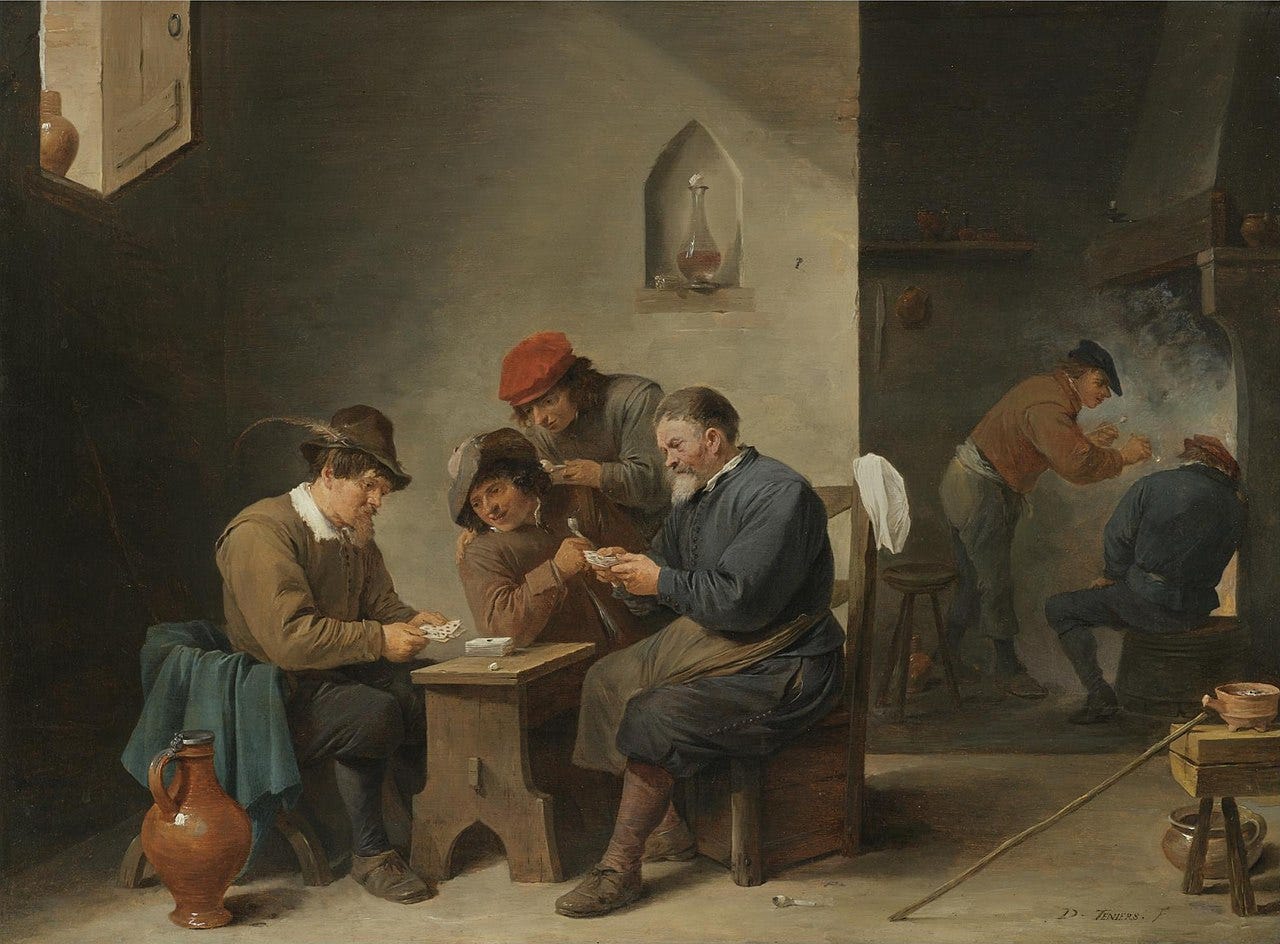
Long before probability became a branch of careful mathematics, it began as a curious playground for gamblers, philosophers, and mathematicians who wanted to understand chance. Some of these questions are centuries old while others are more modern puzzles but all of them show how tricky our intuition can be when randomness is involved.
✨ Here are 8 of my favorites:
1️⃣ The Problem of Points
🎯 What is it?
Two people are playing a fair game for money, but they have to stop before it is finished. How should they split the prize so that it is fair to both players?
💡Why it matters:
This question made Pascal and Fermat write letters to each other in the 1650s and those letters are often seen as the start of modern probability.
2️⃣ De Méré’s Dice Puzzle
🎲What is it?
Is it more likely to get at least one six if you roll a single die 4 times or to get at least one double six if you roll two dice 24 times?
💡Why it matters:
A gambling nobleman asked Pascal this question which made him, and Fermat develop clear ways to calculate probabilities.
3️⃣ The St. Petersburg Paradox
🪙What is it?
You flip a coin until you get heads. If you get heads on the first flip, you win $2. If it takes two flips, you win $4. If it takes three flips, you win $8 and so on doubling each time. How much would you pay to play this game?
💡Why it matters:
Mathematically the expected prize is infinite, but nobody would pay an infinite amount. This shows that average outcome and real-life behavior can be very different.
4️⃣ Buffon’s Needle
📏What is it?
Drop a needle onto a floor with evenly spaced lines like floorboards. What is the chance it crosses a line?
💡Why it matters:
This old experiment was one of the first ways to estimate pi using random experiments and it was an early step toward modern Monte Carlo methods.
5️⃣ The Gambler’s Ruin
💸What is it?
A gambler has a limited amount of money and plays a fair game like flipping coins against an opponent with endless money. What are the chances the gambler will lose everything eventually?
💡Why it matters:
It shows that even fair games can ruin you if you do not have unlimited resources. This idea is important in finance insurance and risk theory.
6️⃣ The Birthday Problem
🎉What is it?
How many people need to be in a room before there is a better than even chance that at least two people have the same birthday?
Spoiler: Just 23 people.
💡Why it matters:
This classic puzzle shows that our brains often guess wrong when thinking about combinations and probabilities.
7️⃣ The Coupon Collector’s Problem
🧃What is it?
You want to collect all different toy prizes inside cereal boxes. How many boxes will you need to buy on average to get them all?
💡Why it matters:
This fun question is about randomness and waiting time and it has real world uses in computer science and data collection.
8️⃣ The Hat Check Problem
🎩What is it?
At a party guests check their hats at the door. When they leave, the hats are given back at random. What is the chance that no one gets their own hat back?
Spoiler: As the number of guests gets very large this chance approaches about thirty seven percent which is one divided by e.
💡Why it matters:
This is a neat example of how random arrangements work, and it connects to beautiful ideas in counting and the exponential function.
✨ Thanks for reading!
I have always loved how these puzzles remind us that chance has rules, but our brains often forget them. If you have a favorite probability puzzle or a story where chance fooled you, I would love to hear it. Drop me a comment! 💬
🧩Happy puzzling!
Anjali